webstratics • May 1, 2024

May 1964 - Third LEAR JET Takes To Air

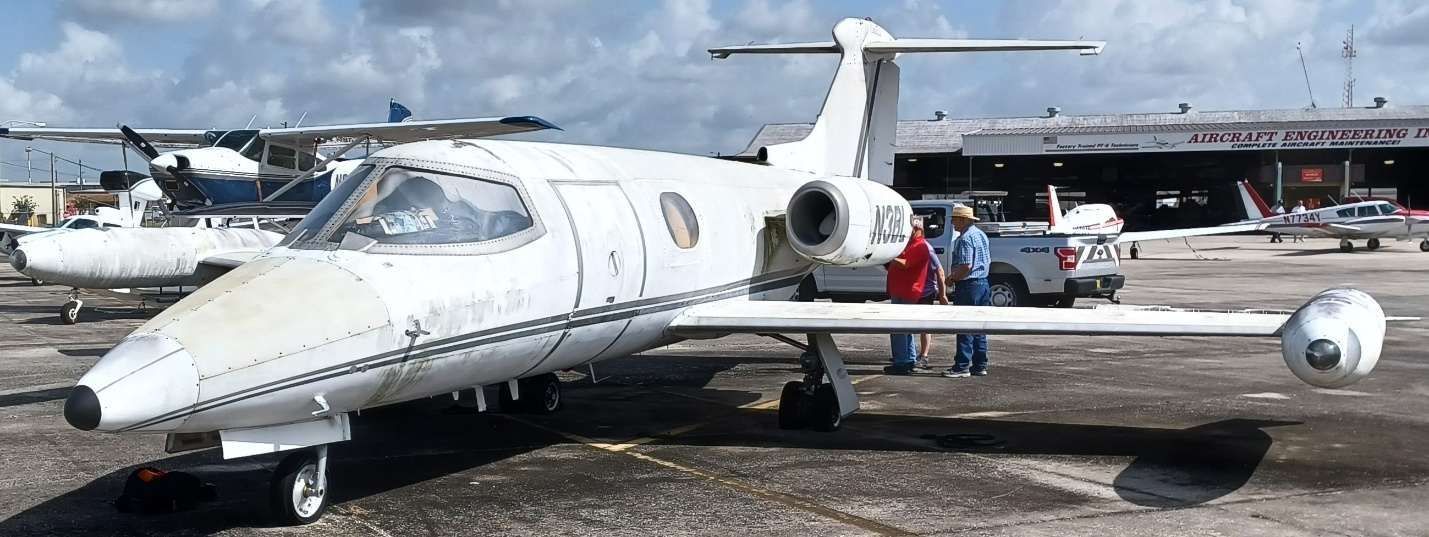
Piloted by Hank Beaird and Glen David, the third production Lear Jet took-off in close formation with N801L from Runway 14 at 6 p.m. last Friday, May 15th. They IeveIed off at 12,000 feet where? speed ranges up to 400 mph were approached. All of N803L's operating systems functioned satisfactorily during the 60-minute test flight. After FAA certification in June, Chemical & Industrial Corporation of Cincinnati Ohio will take delivery. Lear Jet Number Four is now in final assembly while the fuselage and wing are being mated on Number Five.


C7,655 Nautical Mile Total Posted By Lear Jets
During 13 Flights


Our Lear Jets have been seen in eight new ports -of-call from New York to Texas and from Florida to Colorado over a 23 - day period. Covering a criss-cross distance of 7,655 nautical miles, the flights began when Bi 11 L ear took N802L to LaGuardia on April 23rd in 2:21 for an average block- speed of 490 knots. The last cross- country was made to Denver last Friday with a return time of 53 minutes.

Distances ranged from 1,150 nautical miles to New York and a short 294 mil es to Dallas. The 2:50 Westward - leg from Tampa to Dallas was the longest flight time. Lear Jets have now visited 13 cities. The 20 hours logged during this period brings combined totals for Number One and Number Two up to 244 hours in 201 test flights.

Read the full newsletter by clicking the button below.
Download Full Newsletter
By Kristen Nuss July 2, 2026
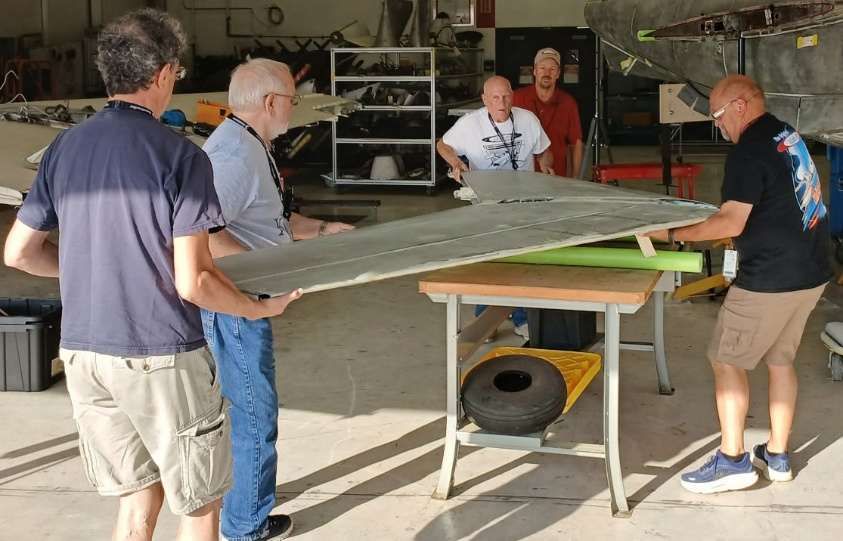
Throughout the construction going on in bays 1 and 10 in building 14, our dedicated volunteers continue to make significant progress. On June 4, 2026 they removed the leading edges from the horizontal stabilizer. This will allow us to start the structural inspection. Once completed, it will be transported to DAS Aviation for restoration. Also, on June 4th, the wing from 23-028, that we acquired for parts, was removed from the wing dolly and installed on the ‘rotisserie’ by volunteers Jim Tidball, Dan DeMott, Hartney Hummer and Al Goodwin. Next, we will check the condition of the wing by performing a leak test on each wing and start removing parts from various wing systems. The daunting task of making a new wiring harness to replace the existing 62-year-old wiring harness continues. On June 9th we caught volunteers Bud Ledom, Rob Bielman and Dave Dendurant hard at pouring over drawings identifying the wires, connectors, switches, etc. A Memorandum of Agreement (MOA) between the CLJF and Embry-Riddle Aeronautical University (ERAU) was signed on May 28th. This MOA details the responsibilities of each of us for the restoration of the landing gear. On June 10, 2026, Jim Long and his son, Zach, of Noble Jet, picked up the landing gear retraction actuators and the box of various hydraulic actuators. There they will be tested and rebuilt. Thank You Noble Jet!!
By Kristen Nuss May 1, 2026
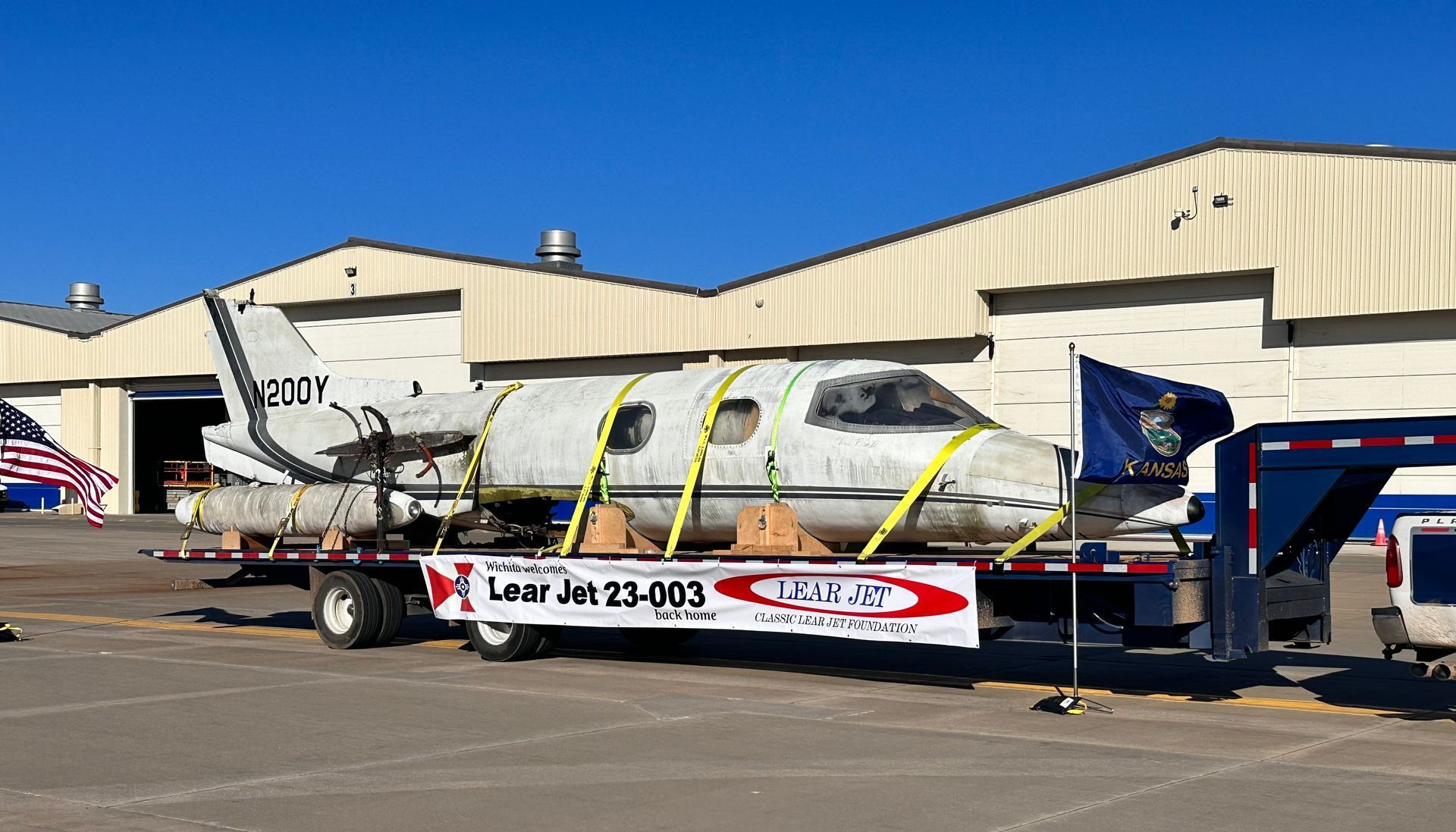
April was a historic month in the restoration of 23-003 N200Y!! First, on April 14 th , after final leveling, the fuselage cradles, jacks and supports were secured firmly to the hangar floor with a special plaster mixture containing hemp fibers (some ropes are made with these fibers). This plaster mixture is commonly used on the factory floor to set tooling jigs so that they cannot move ensuring accurately produced parts and assemblies. With the fuselage secured, we were able to start the removal of skins from the fuselage that need replacement or repair. On April 21, 2026 Hartney Hummer removed the 1st skin panel!! This panel is on the left side of the fuselage, just aft of the engine pylon. This particular panel is not repairable and will have to be replaced. Removal of this panel will also allow the non-destructive inspections (NDI) of the aft fuselage to continue. The NDI test equipment is too big to fit inside the aft fuselage so it will be positioned outside of the stringers pointing inside. International Turbine Industries (ITI) has started the restoration of our CJ610-1 engines. The inspection of the engine cases has started in preparation for them being shipped out to have a coating applied. During earlier discussions between ITI and CLJF, we decided that during the restoration, the engines will be upgraded to the ‘dash 4’ (CJ610-4) configuration. The CJ610-4 engine is a previously approved FAA configuration for the Model 23.
By Kristen Nuss April 1, 2026
Our March progress has been slowed somewhat because of the construction activity being accomplished in bays 1 and 10 at the north end of building 14. 23-003 is in bay 9 which shares a hangar wall with bay 10. The construction has cut electrical power to this wall, but we are working around this problem. Also, our access to bay 9 now involves having to go through a badge access turnstile which limits our volunteers to those of us who have contractor badges. Even with these construction issues, we are continuing with the cutting and marking of the new wiring for the new wiring harness and tracking parts. Also, the wing that we acquired from 23-024 arrived at building 14 on March 3, 2026. We are using this wing to salvage parts including the leading edges, hydraulic components, etc. that will help with the restoration of 23-003 and needed spares. We are completing the final leveling of the fuselage and securing the supports. This will allow us to remove damaged fuselage skins. With these skins removed, Non-Destructive Inspections (NDI) can continue in order to provide us additional data on the fuselage structural integrity. Ed Grabman, Experimental Test Pilot at the Bombardier Flight Test Center, has agreed to chair the 23-003 Cockpit Configuration Committee. This committee is tasked with determining the cockpit upgrades required to operate 23-003 in the current airspace system while maintaining, as much as possible, the look of the original cockpit. Parts donated by Incora are continuing to arrive with the latest delivery on March 3rd. These much needed, and greatly appreciated, parts include mechanical hardware, aircraft wiring and some electrical components.